Choosing between aluminum and uPVC windows is not just a style decision. Frame material affects insulation, durability, maintenance, cost, and the amount of visible glass. For homeowners comparing Chinese-made products, the label alone tells little. Profile design, glazing, seals, and installation quality can change the result substantially.
The U.S. Department of Energy’s Energy Saver guidance estimates that heat gain and loss through windows account for about 25–30% of residential heating and cooling energy use. That makes verified performance data more useful than broad claims that one material is always better. The National Fenestration Rating Council’s ratings, including U-factor and solar heat gain coefficient, help buyers compare tested products. Aluminum is strong and allows slim frames, but it conducts heat readily; a well-designed thermal break matters. uPVC generally insulates more naturally, though frame quality and reinforcement still vary. Feel the difference at the showroom: a narrow metal sightline looks crisp, while a thicker uPVC profile can feel less refined. Neither detail proves performance. As architect and preservation expert Carl Elefante puts it, “The greenest building is the one that is already built.” That reminder favors careful upgrades over automatic replacement. A poorly specified new window can disappoint. It happens.
So, aluminum windows vs upvc windows which is better? The honest answer depends on climate, budget, opening size, and the specific product’s certified ratings. This comparison examines those trade-offs, including where the evidence is clear—and where buyers should ask harder questions.
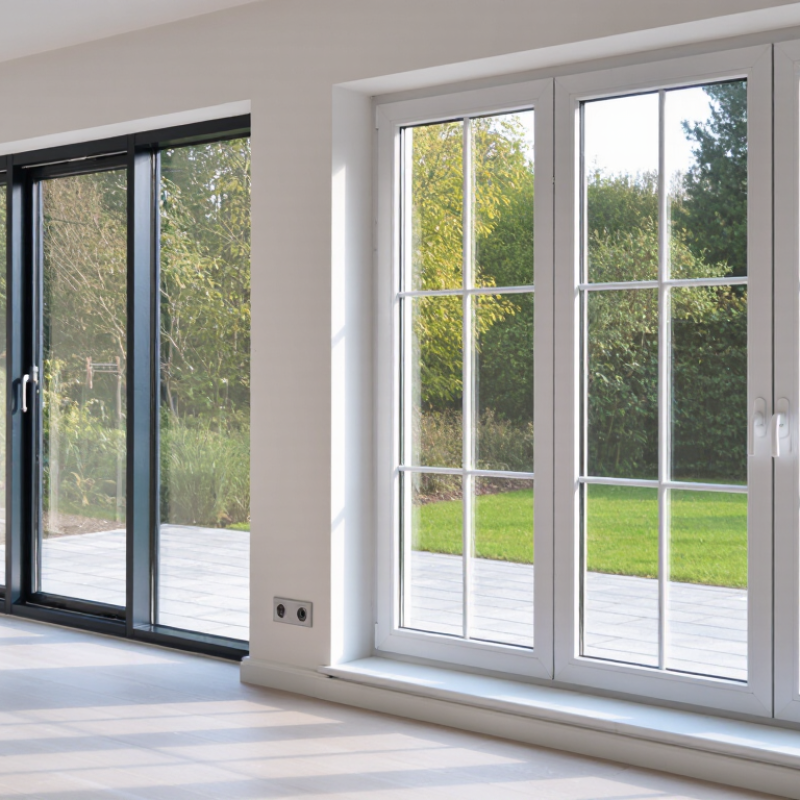
Window performance starts with how each material is made. Aluminum frames are formed from extruded sections, then cut, joined, and finished with a protective coating. Their narrow profiles can admit more daylight and suit large panes. However, aluminum conducts heat readily, so thermal breaks within the frame matter in cooler or hot climates. A poorly specified frame can feel cold near the edge.
uPVC frames are made by shaping rigid plastic profiles, often with internal chambers for insulation. Reinforcement may be added where larger openings need extra stiffness. Welded corners create a different joint from the mechanical connections commonly used in aluminum systems. Details matter. Manufacturing quality, drainage paths, seals, and accurate installation can affect comfort as much as the material itself. Neither option performs well when water cannot escape or the sash is misaligned.
Tips: Ask for frame-section details, glass specifications, and thermal-break information. Check how corners are joined and where drainage exits. Compare complete window samples, not just surface colors. A small sample may hide flaws. For a coastal or dusty site, ask how the finish and seals handle local conditions; there is no single best choice for every opening.
Aluminum frames are usually stiffer, making them suitable for wide openings and slim sightlines. Their strength depends on the frame profile, hardware, and installation—not material alone. A poorly supported corner can still cause trouble. UPVC frames are generally bulkier, but their multi-chamber construction can provide useful rigidity for standard window sizes.
Thermal performance depends on the whole window. Aluminum conducts heat, so a thermal break between its inner and outer sections matters in colder or hotter climates. UPVC naturally resists heat transfer, though glazing, seals, and fitting quality also shape the result. Details matter. For design, aluminum allows narrower frames and larger glass areas, while UPVC offers practical color and finish choices. The best-looking sample may not match the installed result, especially in strong sunlight.
Tips: Compare frame depth, glazing specifications, and air-seal details—not just material labels. Ask how the frame handles your opening size and local climate. Measure twice.
China’s conditions vary sharply. Coastal cities bring humid air, driving rain, and salt exposure; northern areas face dry winters and large temperature swings. In practice, frame choice matters less than glass, drainage, seals, and installation.
Aluminum frames are rigid, making them suitable for wide openings and sliding doors common in apartments. Thermal-break designs reduce heat transfer, but ordinary aluminum can feel cold indoors during winter. UPVC frames generally insulate well and resist moisture, though very large sashes may need reinforcement to limit flex. Neither option fixes poor installation. Water can still collect at a track. A small detail, but an annoying one.
For a south-facing room in Shanghai, low-e glass and sealed joints may matter more than frame material alone. In a northern home, insulated glazing and careful perimeter sealing help reduce cold drafts. Coastal projects should specify corrosion-resistant hardware and check drainage paths after heavy rain. UPVC may discolor or expand under intense sun, depending on its formulation and exposure; aluminum can also suffer coating damage. Ask for tested performance data, and check the actual wall opening before ordering. Measure twice. Measurements are often less neat than drawings suggest.
Aluminum windows often cost more upfront, especially when they use thermal breaks, which reduce heat transfer through the frame. UPVC options are commonly less expensive and can offer good insulation in homes with moderate weather exposure. Actual prices vary with window size, glazing, hardware, and installation quality. A low quote may leave out important details.
Maintenance is simple for both. Aluminum frames usually need occasional cleaning and checks for damaged seals or drainage blockages. UPVC also benefits from gentle cleaning, but prolonged strong sunlight and temperature swings can affect its appearance and shape over time. Not always. Lifespan depends on frame quality, climate, installation, and care; broad estimates are less useful than checking the product specification and warranty. A poorly fitted window can fail early, even with a durable frame.
Environmental impact is not one-sided. Aluminum takes substantial energy to produce, but it is widely recyclable and can remain in service for decades. UPVC production also uses energy, and recycling routes may be less available locally. Recycled content and end-of-life handling matter. A fair comparison is harder than it looks. Ask suppliers about frame materials, glazing performance, repair options, and local recycling before deciding.
| Comparison Factor | Aluminum Windows | uPVC Windows | What This Means for Buyers |
|---|---|---|---|
| Indicative installed cost in China | Approximately ¥800–¥1,800 per m² for many thermally broken residential systems. Non-thermally broken systems may cost less. | Approximately ¥500–¥1,200 per m² for many standard residential systems. | These are broad market estimates, not fixed quotations. Glass specification, frame design, hardware, opening type, installation, location, and project size can change the price substantially. |
| Thermal insulation | Thermally broken frames reduce heat transfer through the metal. Whole-window U-values are often around 1.8–3.0 W/m²·K, depending on the frame and glazing. Non-thermal-break frames generally insulate less effectively. | uPVC frames are naturally less conductive than aluminum. Whole-window U-values are often around 1.5–2.5 W/m²·K, depending on frame chambers, reinforcement, seals, and glazing. | Compare tested whole-window performance, not frame material alone. Lower U-values generally indicate better insulation; glass and installation quality also matter. |
| Lifespan | Commonly about 30–45 years with suitable design, finishes, hardware, and maintenance. Coastal exposure and poor drainage can shorten service life. | Commonly about 20–35 years, depending on formulation, reinforcement, sunlight exposure, hardware, and maintenance. | These are indicative service-life ranges, not guarantees. Local climate, product quality, installation, and repairability have a major effect. |
| Routine maintenance | Clean frames and drainage channels; keep tracks and hardware clear; inspect seals and coatings. Scratches or coating damage may need attention to limit corrosion, especially near the coast. | Clean frames and drainage channels; inspect seals, hardware, and welded corners. Avoid abrasive cleaners and excessive heat that could damage or distort the surface. | Both materials need periodic cleaning and hardware checks. Neither is maintenance-free, and worn seals or hardware may need replacement. |
| Weather and corrosion resistance | Strong and dimensionally stable. Aluminum does not rust like iron, but coatings can be damaged and some alloys or fittings can corrode in aggressive environments. | Does not rust and generally resists moisture. Prolonged intense sunlight and heat can contribute to discoloration, aging, or distortion, particularly in lower-quality products. | For coastal or high-sun locations, specify suitable finishes, UV-resistant profiles, drainage, and corrosion-resistant hardware. |
| Strength and frame size | High strength-to-weight ratio allows relatively slim frames and is often suitable for larger panes, subject to engineering and wind-load requirements. | Usually needs thicker profiles and internal reinforcement to achieve comparable rigidity, especially for larger or heavily loaded windows. | For wide openings or a slim-frame appearance, aluminum often has an advantage. Structural sizing should be checked for the project’s wind conditions and glass dimensions. |
| Noise reduction | Depends mainly on glazing, airtightness, seals, frame design, and installation. The metal frame alone does not ensure better sound insulation. | Also depends mainly on glazing, airtightness, seals, frame design, and installation. A well-made uPVC system can provide effective sound insulation. | For noise control, compare tested acoustic ratings and consider laminated or asymmetric glazing rather than choosing by frame material alone. |
| Fire behavior | Aluminum is non-combustible, although it loses strength at high temperatures and does not make a window fire-rated by itself. | uPVC is a combustible polymer and can soften or deform when exposed to high heat. Fire performance depends on the complete tested assembly. | Where fire performance matters, follow local building codes and use appropriately tested and certified assemblies. |
| Environmental impact | Primary aluminum production is energy-intensive. Recycled aluminum requires much less energy than primary production—often cited as roughly 95% less—and aluminum is widely recyclable where collection is available. | Made from fossil-derived materials and can have lower production energy than primary aluminum, but manufacturing additives and end-of-life handling matter. Recycling is possible, though collection and recycling routes vary by region. | There is no universal environmental winner. Recycled content, product life, insulation performance, local recycling access, and replacement frequency all affect the life-cycle result. |
| Best suited to | Projects prioritizing slim sightlines, large openings, strength, long service life, or a metal finish—especially when a thermally broken system is specified. | Projects prioritizing a lower initial cost and good insulation, particularly for standard-sized residential windows in moderate conditions. | Choose based on the building’s climate, opening sizes, energy goals, budget, appearance, and installation quality. |
Note: Cost, U-value, and lifespan figures are indicative ranges for comparison, not product specifications or warranties. Actual results vary by region, system design, glazing, workmanship, exposure, and maintenance. Request comparable quotations and verified whole-window test data before purchasing.
Choosing Between Aluminum and uPVC for Different Projects
The right frame depends on the building, not just the material. Aluminum suits wide openings, slim sightlines, and contemporary designs. Its strength can support larger glass panels, such as sliding doors facing a garden. However, basic aluminum conducts heat readily. Thermal breaks and suitable glazing matter, especially in homes with cold winters or hot summers. Check the complete window specification, not the frame alone.
uPVC often works well for bedrooms, family homes, and projects where insulation and straightforward upkeep are priorities. Its frame can provide effective thermal performance, though profiles may look bulkier around small panes. Color, sun exposure, opening size, and installation quality can change the result. A low-cost frame is not automatically a good value. It is easy to overfocus on purchase price; that judgment can miss comfort and maintenance needs over time.
Tips: Compare whole-window thermal ratings, glass options, warranties, and installation details. Ask for measurements of the actual openings before choosing. For coastal sites or large spans, confirm the frame’s suitability with a qualified installer. Small details count.
A material-level comparison of typical thermal conductivity
Typical thermal conductivity is approximately 205 W/m·K for aluminum and 0.17 W/m·K for uPVC. Lower conductivity means less heat travels through the material itself. These figures are approximate material values, not whole-window ratings: frame design, thermal breaks, glazing, and installation all affect a window’s actual energy performance. Aluminum is often chosen for strength and slim profiles, while uPVC is often chosen for its insulating properties.
Aluminum is usually stiffer and suits wide openings or sliding doors. Profile design and installation still matter.
UPVC naturally slows heat transfer. Aluminum needs a thermal break, and glazing and seals affect both materials.
No. Aluminum can create narrower sightlines and larger glass areas, but appearance alone says little about insulation.
Humid air, driving rain, and salt exposure can affect hardware and finishes. Check drainage paths after heavy rain.
Insulated glazing and careful perimeter sealing can reduce cold drafts. Ordinary aluminum may feel cold indoors in winter.
They can, but large sashes may need reinforcement to limit flex. Ask how the frame handles your opening size.
Low-e glass and sealed joints may matter more than frame material alone. Details matter.
Compare frame depth, glazing specifications, and air seals. Drawings can look cleaner than the actual wall opening. Measure twice.
Choosing between aluminum and uPVC windows depends on a project’s priorities, local climate, and budget. Aluminum frames are made from strong, lightweight metal and can support large panes, slim profiles, and contemporary designs. uPVC frames are formed from rigid plastic and generally provide effective thermal insulation, helping reduce heat transfer. Both materials are available in different styles and finishes, but their structural characteristics influence the size and appearance of suitable window designs.
In China’s varied climates and building conditions, compare insulation, strength, weather resistance, and ventilation needs rather than relying on one material as universally superior. Aluminum may suit projects that prioritize durability, expansive views, and a modern look, while uPVC can be a practical choice when insulation and initial cost are key considerations. Maintenance requirements, expected lifespan, and the environmental impact of production and disposal also matter. Ultimately, “aluminum windows vs upvc windows which is better” has no single answer: the best option is the one that balances performance, appearance, upkeep, and long-term value for the specific project.

ORM Windows