When considering home renovations, a common question surfaces: "how long do aluminum windows last?" Industry expert John Smith, a longtime window specialist, emphasizes the importance of longevity in home improvement. He states, “High-quality aluminum windows can last between 20 to 30 years with proper care.” This insight leads homeowners to ponder both investment and durability.
Aluminum windows are known for their strength and resistance to harsh weather. However, factors such as climate and maintenance can significantly affect their lifespan. Homeowners often overlook these details, which can lead to premature replacement. Regular cleaning and minor repairs can extend the life of these windows, making it vital to understand how to care for them effectively.
Despite their longevity, some homeowners may feel uncertain about their choices. Questions about aesthetics and energy efficiency often arise. It's essential to strike a balance between style, functionality, and longevity. As we delve deeper, we will explore more about how long aluminum windows actually last and what considerations should be taken.
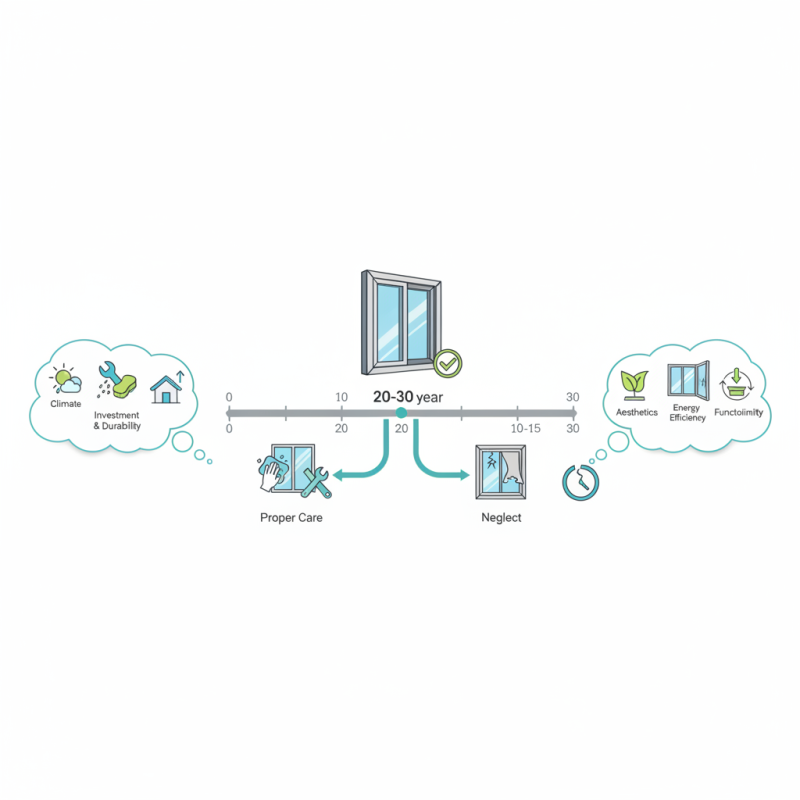
When considering the lifespan of aluminum windows, several factors come into play. Generally, these windows can last between 20 to 40 years. However, their longevity often depends on environmental conditions and maintenance practices. In coastal areas, for example, salt spray can corrode aluminum faster. A study by the American Architectural Manufacturers Association indicates that proper maintenance can extend the life of aluminum windows significantly.
Moisture exposure also plays a critical role. High humidity can lead to oxidation, which compromises the window structure. A National Fenestration Rating Council report suggests that windows exposed to extreme weather tend to have reduced lifespans. Additionally, the quality of installation impacts performance. Poorly installed windows can lead to air leaks and condensation issues, further shaving years off their lifespan.
Tip: Regularly clean your aluminum windows to prevent buildup of salt and dirt. Use mild soap and water for best results. Also, inspect weather seals and frames yearly. Address any signs of wear early to avoid costly repairs. Remember, maintaining your windows means they will serve you better over time.
When considering window materials, aluminum stands out for its durability. Aluminum windows typically last between 30 to 40 years. This lifespan is impressive compared to wood or vinyl windows. Wood can last about 20 years. Vinyl, while affordable, generally has a lifespan of 20 to 30 years.
Aluminum windows are resistant to rust and corrosion. They can withstand extreme weather conditions better than other materials. However, they conduct heat, which can be a downside. Homeowners may need to invest in thermal breaks. This helps improve energy efficiency but adds to the initial cost.
Not all aluminum windows are created equal. Some may degrade faster due to environmental factors. Proper maintenance is essential. In coastal areas, salt air may affect their longevity. Regular inspections can identify early signs of wear. This proactive approach can maximize the lifespan of aluminum windows.
Aluminum windows can last many years, but they do show signs of wear. Homeowners need to be aware of these signs for timely replacements. Common indicators include rust spots, cracks, and persistent drafts. If you notice condensation between the glass panes, that’s a clear red flag. It often means the seals have broken, compromising insulation.
Proper maintenance can extend your windows' life. Regular cleaning is essential. Dirt can degrade the materials over time. Additionally, check for any loose hardware. Tightening screws can help maintain window functionality.
If you see noticeable discoloration or fading, it might be time to consider new windows. These changes often indicate that the aluminum is aging, losing its protective coating. Look for uneven operation when opening and closing. If they stick or require excessive force, that’s another sign of deterioration. These factors matter; they affect your home’s energy efficiency. Don't overlook these signs to ensure your home stays safe and comfortable.
Aluminum windows are known for their durability. However, they do require proper maintenance to ensure longevity. Regular cleaning is a must. Use a mild detergent solution and a soft cloth to wipe down the frames. This removes dirt and prevents corrosion. Pay attention to the corners and joints where dirt can accumulate.
Another important aspect of maintenance is checking the seals. Inspect the weather stripping around your windows for any signs of wear. If you notice gaps, it may lead to air leaks. Replacing damaged seals can enhance energy efficiency. Lastly, lubricate hinges and locks to ensure smooth operation. This helps prevent rust and mechanical failure over time.
Even with careful maintenance, issues may still arise. Scratches can develop on the surface, and while they might not affect functionality, they can degrade the appearance. Consider touch-up paints specifically designed for aluminum. Keep in mind that improper maintenance can lead to more severe problems. Being proactive is essential to extend the life of your aluminum windows.
| Aspect | Details |
|---|---|
| Average Lifespan | 20 to 30 years |
| Material Durability | Resistant to rust and corrosion |
| Maintenance Frequency | Every 6 months |
| Cleaning Method | Mild detergent and water |
| Common Issues | Sealing problems and paint chipping |
| Energy Efficiency | Thermal breaks enhance insulation |
| Weather Resistance | Withstands extreme weather |
| Replacement Indicators | Foggy panes and draftiness |
When considering aluminum windows, homeowners should be aware of environmental factors impacting their lifespan. Aluminum is known for its durability. However, environmental elements such as coastal salt air or harsh rainfall can accelerate wear.
In areas with extreme climates, the finish on aluminum windows might degrade faster. This could lead to oxidation or corrosion over time.
Another important aspect is insulation.
High-quality thermal breaks can enhance energy efficiency and prolong the window's life. Yet, many overlook this detail during installation. Poor insulation can result in condensation, which may damage window seals and reduce longevity.
Homeowners must reflect on how local weather and air quality affect their aluminum windows. Each region presents unique challenges that demand attention and care.
Finally, regular maintenance plays a crucial role. Cleaning windows periodically can prevent buildup of dirt and salt. Failing to do so can lead to performance issues. While aluminum windows are resilient, neglect can shorten their lifespan significantly. Balancing maintenance with environmental considerations is key to maximizing their durability.
: Aluminum windows usually last between 30 to 40 years.
Wood lasts about 20 years, while vinyl typically lasts 20 to 30 years.
Yes, aluminum windows resist rust and corrosion, holding up well in extreme weather.
Yes, regular maintenance is crucial to prolong their lifespan and ensure functionality.
Look for rust spots, cracks, drafts, or condensation between glass panes.
Regular cleaning and inspections can significantly extend their life and performance.
Discoloration often signals aging aluminum. Consider replacing the windows if this occurs.
Yes, aluminum can conduct heat, which may affect energy efficiency. Consider thermal breaks.
Sticking windows may indicate deterioration. Addressing this can improve energy efficiency.
Yes, environmental factors can cause some aluminum windows to degrade faster than others.
When considering how long do aluminum windows last, several factors play a crucial role in determining their lifespan. Primarily, the quality of the materials, the installation process, and the local climate can all affect durability. On average, aluminum windows can last anywhere from 20 to 30 years, which is longer than many other window materials like wood or vinyl.
To ensure longevity, homeowners should be attentive to signs that indicate it may be time for a replacement, such as frequent drafts, condensation between panes, or visible corrosion. Regular maintenance, including cleaning and sealing, can significantly extend the life of aluminum windows. Additionally, considering environmental factors and the positioning of windows can also contribute to their overall durability and performance. By understanding these aspects, homeowners can make informed decisions about their windows and enhance their lifespan.

ORM Windows