Aluminum windows are becoming a practical choice for greener buildings. Their slim frames admit more daylight while supporting strong, durable façades. This can reduce artificial lighting during occupied hours. However, daylight performance depends on orientation, shading, glass selection, and local climate. A window alone cannot make a building sustainable.
Understanding how aluminum windows contribute to sustainable construction requires attention to the entire product life cycle. Aluminum can be recycled repeatedly without losing its essential properties. Recycled aluminum usually requires far less energy than primary production, although exact savings depend on the power source and processing method. Responsible manufacturers should disclose recycled content, energy data, and environmental product declarations. These documents offer stronger evidence than broad marketing claims.
Performance matters in daily use. Thermally broken frames can limit heat transfer through the metal, especially when paired with low-emissivity glazing and careful installation. Well-sealed windows may reduce drafts, condensation, and heating or cooling demand. At a busy office, this could mean steadier indoor temperatures near the perimeter desks. Small details matter.
Yet, aluminum windows are not automatically environmentally superior. Poorly designed frames, oversized glazing, or weak installation can increase energy loss. Transportation, coatings, maintenance, and end-of-life recovery also affect results. Project teams should compare aluminum with alternative materials through whole-life assessments, not assumptions. My experience with building specifications suggests that the best decision combines verified data, climate-responsive design, and realistic maintenance planning. Sustainability is measurable, but never perfectly simple.
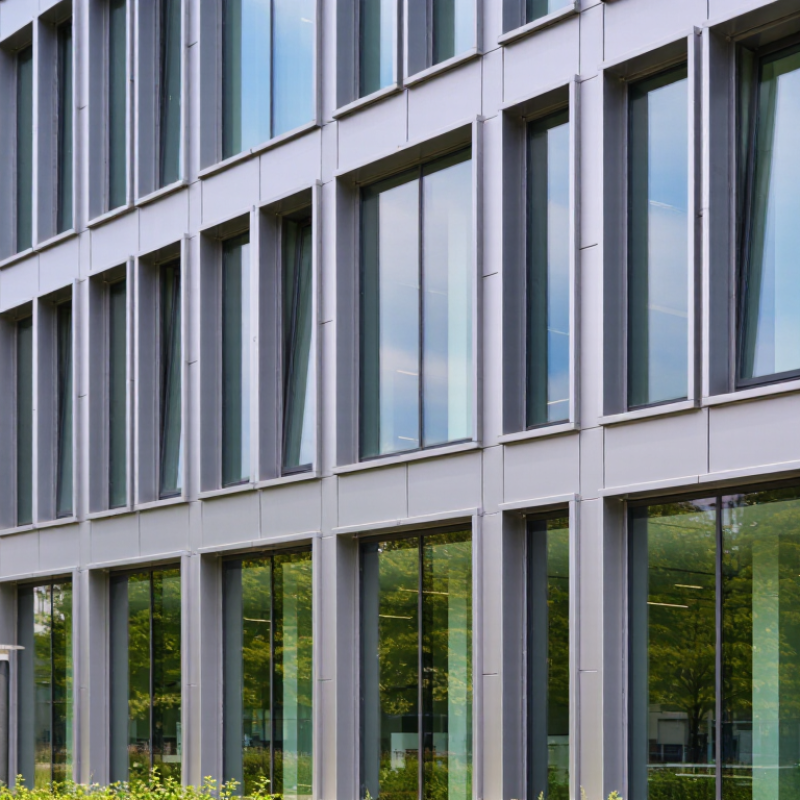
Sustainable construction begins with measured choices, not attractive claims. The UNEP 2023 Global Status Report states that buildings consumed about 34% of global energy and produced roughly 37% of energy-related emissions. Windows influence this burden through heat transfer, daylight, ventilation, and replacement frequency.
Aluminum windows are relevant because the material is durable, lightweight, and highly recyclable. The International Aluminium Institute reports that recycling aluminum can require up to 95% less energy than producing primary aluminum. This advantage matters when old frames return to established recycling systems. However, recycled content alone does not guarantee a low-impact window. Product documentation should identify recycled content, manufacturing energy, and end-of-life pathways.
Thermal design remains critical. A thermally broken frame, low-emissivity glazing, and correctly sealed installation can reduce unwanted heat movement. The U.S. Department of Energy recommends evaluating whole-window performance, including the frame, glass, and spacer. Small installation gaps can undermine impressive laboratory values.
Details matter.
On active projects, condensation risks often appear around poorly insulated reveals. Aluminum also conducts heat efficiently, which is a weakness without thermal separation. This is where specifications need honest review. Environmental Product Declarations can support comparisons, but they depend on declared assumptions and system boundaries. Designers should assess climate, orientation, glazing ratio, maintenance access, and expected service life together. Sustainable performance is not automatic; it is engineered, measured, and sometimes revised.
How Aluminum Windows Support Sustainable Construction?
How Aluminum Window Materials Are Sourced and Manufactured
Aluminum windows begin with raw material choices. Primary aluminum comes from bauxite ore, while recycled aluminum comes from recovered frames, cables, and manufacturing offcuts. Recycling usually requires far less energy than producing new aluminum. However, recycling is not automatically sustainable. Collection systems, sorting quality, and electricity sources still matter.
Reliable manufacturers should document material origins and maintain traceability records. They may use certified supply chains, recycled-content declarations, and independent audits. These records help architects check environmental claims instead of trusting vague marketing language. In practice, I would request the percentage of recycled aluminum, energy data, and factory waste figures. Small details can reveal large differences.
Manufacturing starts with billet heating and extrusion. Machines press softened aluminum through shaped dies, creating window profiles. Thermal breaks are then installed to reduce heat transfer through the frame. Cutting, drilling, coating, and assembly follow. Powder coating can limit solvent emissions, while closed-loop water systems can reduce factory waste. Each frame should undergo checks for dimensions, coating adhesion, air leakage, and water resistance.
The process is efficient, but not flawless. Extrusion still consumes energy. Coatings can complicate future recycling. Poorly designed frames may also create unnecessary material waste. This needs honest review. A durable window, installed correctly, can remain useful for decades. That service life often matters as much as its factory footprint.
Recycled aluminum can require approximately 5% of the energy used to produce primary aluminum from bauxite. Using recycled content in window frames helps reduce energy demand while preserving aluminum’s durability, corrosion resistance, and recyclability.
Data basis: International Aluminium Institute estimates that recycled aluminum requires about 5% of the energy needed for primary aluminum production. Actual values vary by smelter technology, electricity source, collection systems, and recycling process.
How Aluminum Windows Support Sustainable Construction?
Aluminum windows can improve building energy performance when their frames are properly designed. Aluminum conducts heat quickly, so uninsulated frames may create cold edges and unwanted heat transfer. Thermal breaks interrupt this path. They help keep indoor surfaces warmer during winter and reduce heat entering rooms during summer.
The U.S. Department of Energy estimates that windows account for about 25–30% of residential heating and cooling energy use. This makes window selection more important than many project teams expect. High-performance aluminum systems combine thermal breaks, low-emissivity glazing, insulated glass, and effective weather seals. Low U-factors indicate better insulation, while lower solar heat gain coefficients can reduce cooling demand in sunny climates. The National Fenestration Rating Council provides independently verified performance ratings for these values.
Installation still decides much of the real outcome. A small gap around the frame can allow drafts, moisture, and noise. Careful air sealing, drainage detailing, and alignment are essential. The International Energy Agency’s 2023 Global Status Report for Buildings and Construction states that building operations represent about 30% of global final energy consumption. Better windows can support this wider efficiency challenge, but they cannot repair poor shading or oversized mechanical systems.
Performance may also vary by climate. A low solar gain coating can help a hot office, yet reduce useful winter sunlight in a colder region. Aluminum is durable and highly recyclable, but recycling benefits depend on collection and processing systems. That limitation deserves honest consideration.
Aluminum windows support sustainable construction through long service life and modest maintenance needs. Their frames resist rot, insects, and moisture damage, especially in humid buildings. This reduces replacement work, transport, and discarded materials. However, durability depends on drainage, coatings, installation, and local weather. A neglected frame still fails.
The International Aluminium Institute reports that recycled aluminum requires about 5% of the energy used for primary production. This makes end-of-life recovery important, although recycling does not erase the impacts of mining or manufacturing.
The United Nations Environment Programme reported that buildings consumed around 32% of global energy in 2022. Better-sealed windows can reduce drafts and heating or cooling demand, but performance depends on glazing, installation quality, and occupant behavior. Maintenance also matters. Cleaning tracks, checking seals, and repairing damaged finishes can extend service life. Small actions help. They are not magic.
Tips: Inspect window seals twice a year, especially before extreme weather. Keep drainage holes clear of dust and leaves. Use mild cleaners instead of abrasive products. Record repairs and component replacements for future maintenance planning. When renovation is unavoidable, separate aluminum frames from glass and other materials for proper recycling. This approach follows circular-construction guidance from the International Aluminium Institute, though local recycling systems may still be inconsistent. That limitation deserves honest attention.
Aluminum windows can support sustainable construction beyond their service life. In practice, installers often remove frames during renovation, then separate aluminum from glass, seals, screws, and thermal-break materials. Clean aluminum scrap can return to manufacturing with far less energy than producing primary aluminum. This reduces demand for new ore and keeps valuable material in circulation.
Tips: Choose windows designed for disassembly. Label frame alloys when possible. Keep glass and aluminum separate. Protect removed frames from concrete, paint, and mixed waste. Ask a qualified local recycler about collection requirements.
Reuse deserves attention too. A sound frame may serve in another building, especially when dimensions match. Recycling remains useful when damage, corrosion, or outdated performance prevents reuse. However, the process is not automatic. Composite parts can slow separation, and poor sorting can lower material quality. That is where project records matter. Clear product information helps contractors identify components and plan recovery before demolition begins. Designers should consider future removal, not only initial installation. Small details, such as accessible fasteners, can make circular use more realistic.
Yet, recycling alone cannot solve every construction impact. Transport distance, replacement glass, coatings, and energy performance also influence the result. A reflective approach is necessary. Sustainable choices should be measured across the window’s complete life cycle.
They are durable, lightweight, and highly recyclable. Their long service life can reduce frequent replacement. Recycling still depends on reliable local systems.
Thermal breaks reduce heat transfer through the frame. Low-emissivity glass and insulated glazing can further limit heat loss. Installation quality matters greatly.
It separates the inner and outer aluminum sections with an insulating material. This reduces cold edges during winter. Without separation, aluminum transfers heat quickly.
Look for low U-factors, suitable solar heat gain values, insulated glass, and effective weather seals. Climate and building orientation should guide the selection. One setting cannot suit every project.
Small gaps can create drafts, moisture problems, and heat loss. Proper alignment, air sealing, and drainage protect real-world performance. Laboratory ratings are not enough.
Yes, clean aluminum can re-enter manufacturing with much less energy than primary production. Separate frames from glass, seals, screws, and mixed waste. Sorting is essential.
Choose accessible fasteners and designs that support disassembly. Keep product records and identify frame materials before demolition. Protect removed frames from paint and concrete.
Not always. Reuse may be better when frames remain sound and dimensions match. Transport, replacement glass, coatings, and energy performance also affect the result.
Uninsulated frames can increase heat transfer and condensation risks. Recycled content alone does not prove low environmental impact. The decision needs life-cycle review, and sometimes revision.
Aluminum windows are an important part of sustainable construction because they combine material efficiency, long service life, and strong performance. Understanding how aluminum windows contribute to sustainable construction begins with examining how the material is sourced and manufactured. Responsible production can reduce waste through efficient processing and the use of recycled aluminum, while modern designs help limit material consumption without sacrificing strength. These windows can also improve building energy performance by supporting effective insulation, airtightness, and daylight access, which may reduce heating, cooling, and artificial lighting needs.
Durability further strengthens their environmental value. Aluminum frames resist moisture, corrosion, and deformation, allowing them to remain functional for many years with limited maintenance and fewer replacements. This reduces the resources and emissions associated with manufacturing, transporting, and installing new products. At the end of their service life, aluminum windows can be dismantled and recycled, enabling the material to re-enter production instead of becoming waste. Together, responsible sourcing, energy efficiency, durability, and recyclability make aluminum windows a practical choice for more resource-conscious buildings.

ORM Windows